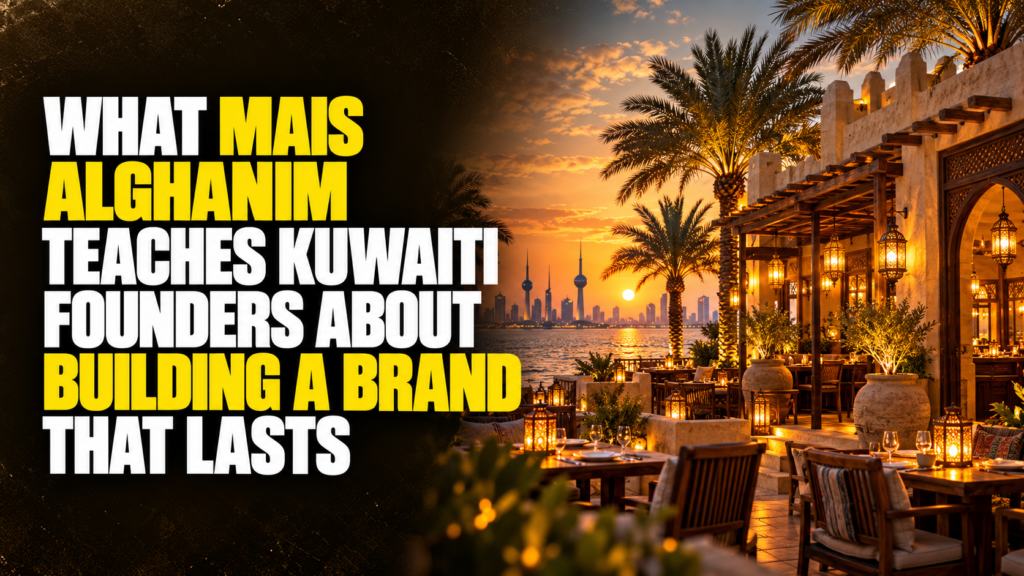
Most startups in Kuwait are built to launch fast. Very few are built to last 70 years. That’s why Mais Alghanim business lessons are worth studying for any founder here.
Mais Alghanim did last. It started in 1953 as a simple canteen feeding company employees and became one of the most recognised restaurant names in the country. It had no big launch, no funding round and no aggressive expansion plan. It grew through steady, practical decisions made over decades.
As someone who works with founders on idea validation, strategy and growth, I find Mais Alghanim’s story useful for one reason. It shows what sustainable growth looks like in the Kuwaiti market. Here’s what I took from it.
Prefer video? Watch the short version on Instagram.
It Started With a Customer, Not a Concept
In 1953, Edmond Barakat (known as Abu Emile) opened Alghanim Mess, a staff cafeteria for employees of Yusuf Ahmed Alghanim & Sons. The goal was simple: feed people well, every day.
Nobody was trying to “disrupt dining.” There was a group of people with a daily need and someone who served it reliably. Over time, word spread. The canteen began offering full meals, then takeaway and catering, and its customer base grew well beyond the original workplace.
Founder takeaway: This is idea validation in its purest form. Before you build the brand, the app or the second branch, prove that a specific group of people wants what you offer and keeps coming back. Mais Alghanim had guaranteed daily customers from day one. Most founders skip this step and pay for it later.
Succession Is a Strategy, Not an Afterthought
In 1974, Edmond’s son Emile Barakat took over. Many family businesses in the Gulf struggle at exactly this point. The founder’s instincts don’t always transfer, and the next generation either changes too much or too little.
Mais Alghanim managed the handover well. The core values of good food, warm service and fair prices stayed the same, and the business kept moving forward. Thirteen years later, in 1987, it relocated to the former Kuwait Television premises in Dasman and took the name Mais Alghanim.
Founder takeaway: If you run a family business in Kuwait, plan succession years in advance. Write down what must never change and what the next leader is free to rethink. That clarity protects both the brand and the relationship.
Your Location Is Part of Your Brand
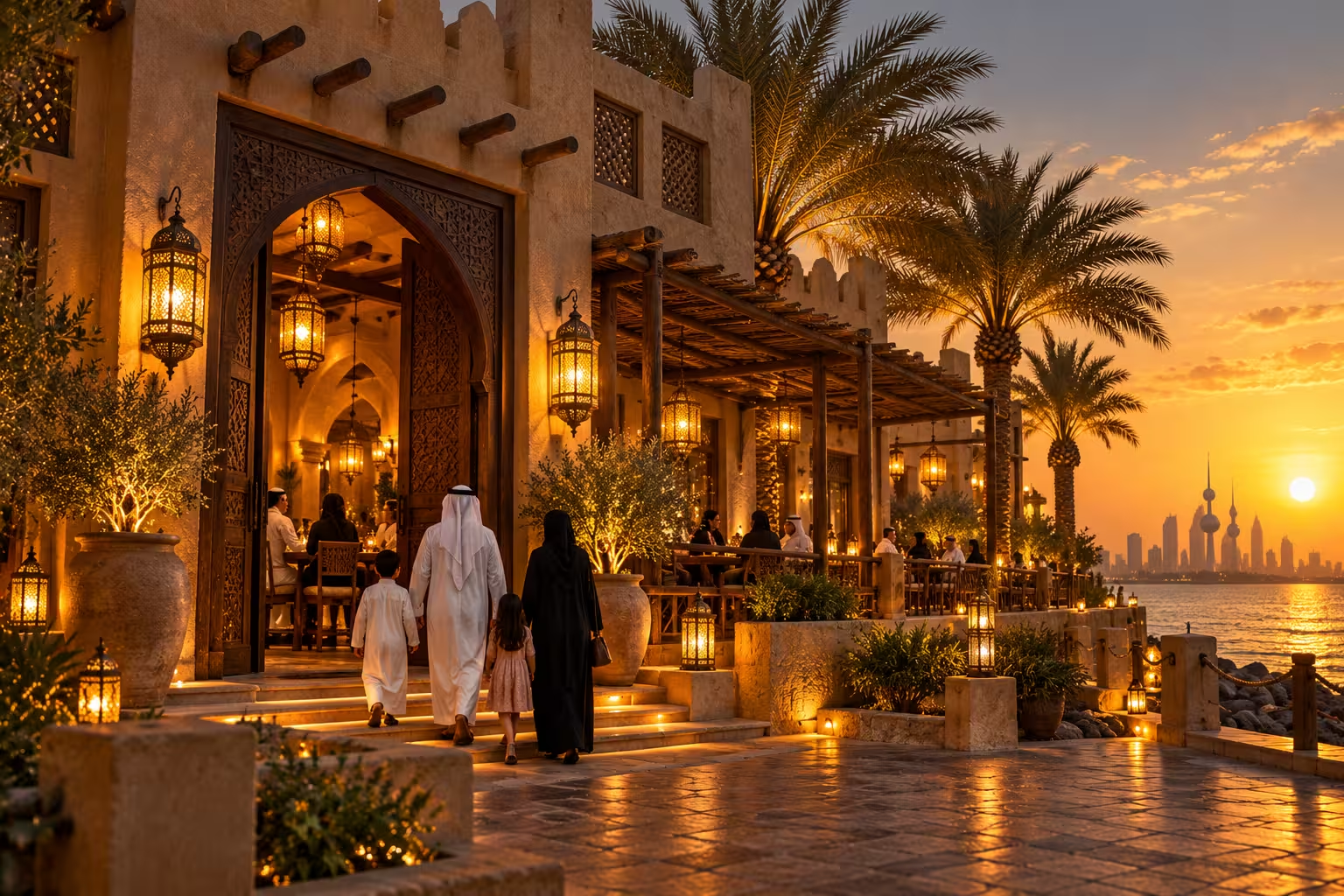
In 2003, the restaurant moved to its flagship site on Arabian Gulf Road, a building with traditional Kuwaiti architecture. The move was more than a change of address. It turned the restaurant’s identity into something people could see and walk into.
Customers don’t just remember what they ate. They remember where they sat, who they were with and how the place made them feel. A space that reflects local heritage creates an emotional connection that a menu alone can’t.
Founder takeaway: Brand isn’t your logo. It’s every touchpoint: your space, your staff, your packaging, your website, even your WhatsApp replies. If those don’t tell the same story, customers notice.
Expand Where Demand Already Exists
The next big step came in 2010 with a second restaurant in Mahboula, plus dedicated takeaway and delivery outlets.
Look at the timing. That was 57 years after the business started. Expansion followed proven demand instead of running ahead of it. The new channels also matched how customers actually wanted to eat: some at the table with family, others at home.
Founder takeaway: I see many Kuwaiti businesses open branch two or three before branch one is consistent. Expansion multiplies whatever you already have, including your problems. Fix operations, train your team and document your standards first. Then grow.
A Quick Look at the Milestones
| Year | What Happened | The Strategic Move |
|---|---|---|
| 1953 | Alghanim Mess opens as a staff canteen | Serve a guaranteed, recurring need. |
| 1974 | Emile Barakat takes over | Smooth generational handover |
| 1987 | Moves to the former KTV site, renamed Mais Alghanim | New identity, wider audience |
| 2003 | Flagship opens on Arabian Gulf Road | Brand tied to Kuwaiti heritage |
| 2010 | Mahboula branch plus takeaway and delivery | Expansion backed by demand |
Loyalty Is Built in Boring Ways
Mais Alghanim built its reputation on three things: food quality, service and value for money. None of them are exciting, and all of them take discipline.
Loyal customers rarely come back because of a clever campaign. They come back because the experience was good every single time. Consistency is what turns first-time visitors into families who’ve been eating there for three generations — and it’s the most underrated of all the Mais Alghanim business lessons.
4 Questions to Ask About Your Own Business
Use Mais Alghanim’s journey as a checklist:
- Who is my “staff canteen” customer? Which group of people needs me every day or every week?
- What must never change? Define your non-negotiables before you scale.
- Does every touchpoint tell the same story? Check your space, your service and your online presence.
- Is my growth backed by demand or by ambition? Be honest about the answer.
FAQs
How old is Mais Alghanim?
Its roots go back to 1953, which makes it one of Kuwait’s longest-running restaurant businesses.
Who started Mais Alghanim?
Edmond Barakat, also known as Abu Emile, started it as a canteen for Alghanim company staff.
Why did the name change from Alghanim Mess to Mais Alghanim?
The rename happened in 1987, when the restaurant moved to the former Kuwait Television premises and began serving a much broader public audience.
Where is the main Mais Alghanim restaurant today?
The flagship has been on Arabian Gulf Road since 2003, and a second restaurant operates in Mahboula.
What’s the biggest lesson for startups?
Grow at the speed of your customers. Validate demand, stay consistent, and expand only when your operations can handle it.
Final Thought
Mais Alghanim didn’t win by being the fastest or the flashiest. It won by being dependable for more than seven decades. For founders in Kuwait, that’s both a reminder and a challenge: build something people can rely on, and growth tends to follow.
If you’re testing a new idea or planning your next stage of growth, let’s talk. I help founders validate ideas, research their market and build strategies that hold up over time.
Sources: Mais Alghanim – Our Story · Barakat Foods – Our Brands