
Most people walk past it without a second thought.
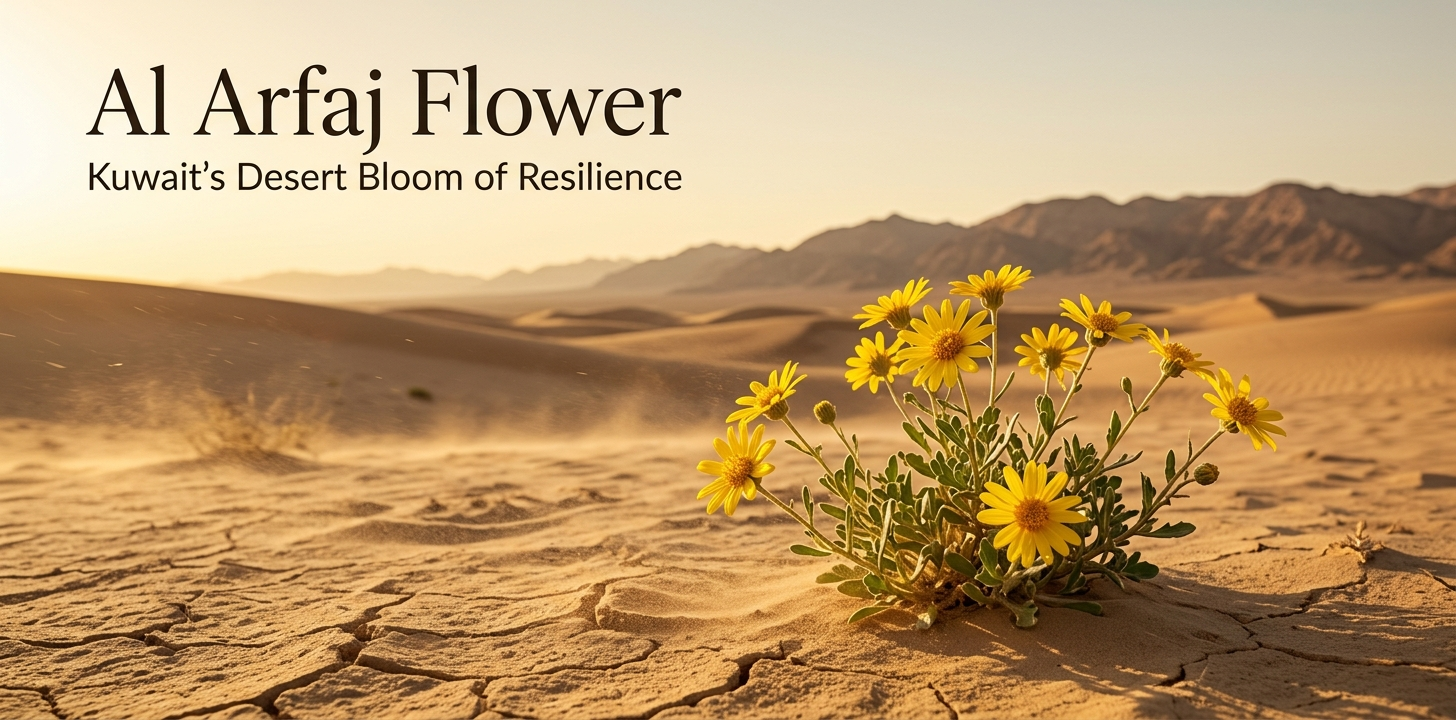
A small yellow flower growing alone in dry, cracked sand under the blazing Kuwait sun. No shade. No water. No one taking care of it.
And yet it blooms.
This is the Al Arfaj flower, the national flower of Kuwait. Once you understand what this plant survives just to grow, you will never look at it the same way again.
What Is the Al Arfaj Flower?
Before exploring its deeper meaning, let’s understand the basics.
The Al Arfaj flower (Rhanterium epapposum) is a wild desert shrub native to Kuwait and the wider Arabian Peninsula. It belongs to the Asteraceae family, the same plant family as sunflowers.
This already tells you something important about the plant: it is bright, resilient, and capable of thriving in harsh sunlight.
Quick Facts About the Al Arfaj Plant
- Common name: Al Arfaj (also spelled Arfaj)
- Scientific name: Rhanterium epapposum
- Plant family: Asteraceae
- Native region: Kuwait, Saudi Arabia, and the Arabian Peninsula
- Flower color: Yellow
- Blooming season: Spring, usually after winter rainfall
Although small and simple in appearance, the Arfaj plant is one of the most recognizable desert flowers in Kuwait.
Why Kuwait Chose the Al Arfaj Flower as Its National Symbol
Kuwait did not choose an imported rose or a rare orchid as its national flower.
Instead, it chose a plant that grows directly from the desert sand.
At first glance, many people might mistake the Al Arfaj flower of Kuwait for an ordinary desert plant. But the meaning behind this choice reflects something powerful about the country itself.
The Arfaj flower represents resilience, endurance, and quiet strength.
Unlike delicate plants that require controlled environments, the Arfaj survives in the following:
- Extreme heat
- Minimal rainfall
- Dry, nutrient-poor soil
- Harsh desert winds
Yet every spring, it blooms again.
Kuwait’s history reflects this same spirit. The nation has faced challenges, conflict, and rebuilding periods — but it continues to grow and move forward.
The Al Arfaj flower in Kuwait symbolizes that perseverance.
The Powerful Lesson the Arfaj Plant Teaches Us
The story of the Arfaj plant in the Arabian Peninsula is not just about a flower.
It is also about mindset.
Many people wait for the perfect conditions before they begin something important.
They think:
- “When things get easier, I will start.”
- “When I have more resources, I will grow.”
- “When life becomes stable, I will act.”
But the Al Arfaj flower does not wait for ideal conditions.
It grows in the middle of the desert.
It adapts instead of complaining.
This is the real message of Kuwait’s national flower:
Do not wait for comfort. Grow where you are.
Al Arfaj in Kuwaiti Culture and Heritage
Beyond symbolism, the Al Arfaj flower plays an important role in Kuwaiti culture and memories.
For many older generations in Kuwait, the blooming of Arfaj across the desert marks the arrival of spring.
This season often brings the following:
- Desert trips with family
- Outdoor gatherings
- Traditional camping experiences
- Celebrations of Kuwait’s natural beauty
The flower is deeply tied to Kuwait’s desert heritage and identity.
The Arfaj Flower in National Honors
The flower is also used in official Kuwaiti medals and honors.
Badges inspired by the Arfaj flower of Kuwait are awarded to individuals who demonstrate exceptional service and dedication to the country.
Receiving such an honor carries deep respect.
When a symbol appears both in national awards and childhood memories, it becomes more than just a plant — it becomes part of a nation’s identity.
The Environmental Importance of the Al Arfaj Plant
The Al Arfaj plant is also vital for Kuwait’s desert ecosystem.
As Kuwait continues to expand and urbanize, protecting natural desert habitats has become increasingly important.
The Arfaj contributes to the environment in several ways:
- Provides grazing material for camels and desert animals
- Helps stabilize sandy soil with its root system
- Supports biodiversity in Kuwait’s desert regions
- Helps reduce desertification
Because of these ecological benefits, protecting Kuwaiti flora and native desert plants like the Arfaj is crucial.
The plant reminds us that Kuwait’s identity is tied not only to its cities but also to its desert landscape.
Final Thought: What the Al Arfaj Flower Teaches Us Every Spring
Each year, when yellow Arfaj flowers bloom across Kuwait’s desert, they quietly deliver the same message.
Conditions will never be perfect. Bloom anyway.
Whether you are:
- Building a business
- Raising a family
- Starting a new chapter in life
- Working through difficult times
The Al Arfaj flower in Kuwait shows that resilience is not something you are born with.
It is something you choose — every day.
Kuwait chose this flower for a reason.
Maybe we should all learn from it.